mark-elliott.net

work, research, family, art … life
  • rss
  • Home
  • about
  • My PhD
    • PhD Examination Reports
    • 0. Prelude: Meta Contexts

Vloged by Howard Rheingold

mark | 17 July 2008 | 12:25 pm

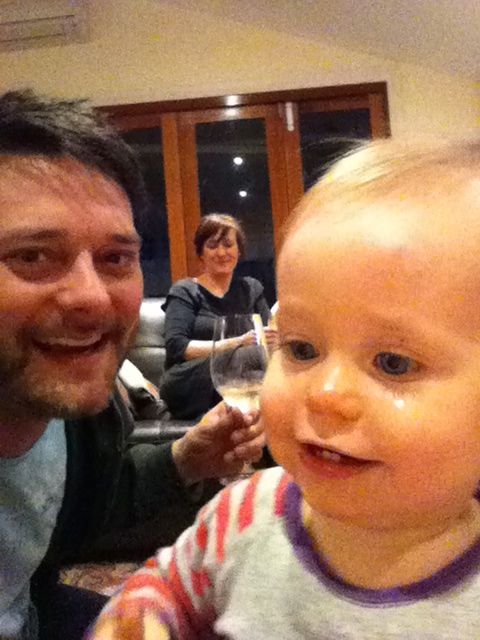
I made a brief stop in Howard Rheingold’s beautiful garden office while passing through San Francisco in early July ‘08. He interviewed me for his vlog on the topic of stigmergy and the recent City of Melbourne wiki my company CollabForge designed and developed. (Too bad I look as exhausted as I was - traveling with 2yr old twins is way harder than I ever imagined!) Afterwards we went on a splendid walk on Mt. Tamalpais - great views (despite smoke from forest fires) of the SF bay.

click to watch on Howard’s site

Tech Tags: stigmergy collaboration masscollaboration wiki
Comments
1 Comment »
Categories
research, work
Tags
collaboration, stigmergiccollaboration, stigmergy, wiki
Comments rss Comments rss
Trackback Trackback

Wikinomics and Defining Collaboration

mark | 22 January 2008 | 12:00 am

Anthony D. Williams, coauthor of Wikinomics: How Mass Collaboration Changes Everything, recently blogged my phd dissertation.

The post highlights the fact that Wikinomics was in fact the first text published on the topic of mass collaboration (as far as my research could uncover). It also highlights my criticism of the book – which must be taken in context, being that of a phd literature review. In this context each work must be critically reviewed with the objective of highlighting how your own work is unique and required.

To this end, my critique of Wikinomics is mainly centered on the usage of the term ‘collaboration’, in that the book does not provide a definition as to what it means when using the term. This is of course not unusual (unless you’re writing a phd!) as most of us tend to feel fairly confident that we know what the word means. After all, a reader can always go to the dictionary if they feel the need, can’t they?

As an artist who has worked collaboratively for many years, I was quite surprised to learn that there was no ‘general theory of collaboration‘ or anything of the like to refer to when writing a phd on mass collaboration. Rather, having spent many years producing works which required creative engagement with others in the most intimate and complex of manners, I was forced to rely upon dictionary definitions, which were far too broad to use in the context of a phd. This lead me to do a fairly comprehensive investigation into the etymology of the term collaboration, as well as to interrogate the meanings I discovered. I found that what was once meant by collaboration – working with someone on the creation of a literary work – has modulated (esp. post Internet) to anything and everything that requires more than one person to achieve it – e.g. ‘collaborative filtering’ or ‘collaborative bookmarking’.

But are these newer references really collaboration, or are they yet another collective process? In my own experience (also supported by the etymology of collaboration) creative production (in the sense of artistry) is a necessary component of collaboration. This lead me to an investigation of creativity – what is it? – of course a huge topic in its own right. Sparing you the details, what I discovered was that there was an elegant way of distinguishing between coordination, cooperation and collaboration.

Simply put,

  • coordination is required for all collective activities (bringing the parts together in a way that yields synergy),
  • cooperation employs linear procedures to leverage collective potential (if each participant does exactly ‘x’, then a predictable ‘y’ is the result),
  • while collaboration is different in that through nonlinear creative processes (no one knows exactly what they have to do until they do it, and even then the outcome is unknown) a shared understanding is created amongst the participants – one unique to those participants and that collaboration.

By way of example,

  • coordination = a web search: bringing together parts of the web in a way that creates meaning, i.e. synergy,
  • cooperation = social bookmarking: if many people tag their webpages using a particular platform, and a particular procedure, a resource much larger than any individual could develop may be generated,
  • collaboration = Wikipedia editing: read an entry, contribute in any number of modes (form, content, discussion, etc) and from an infinite number of perspectives (the multiplicity of opinion and creative volition) one becomes part of a highly complex negotiation of a shared understanding (no one owns or comprehends the whole but contributes a part of it).

The below image represents the relationship between these three terms using the technical language developed in my phd (likely to require a bit more reading for context).


So thank you Anthony for the post (hopefully my criticism makes more sense now) and thank you especially for being so good natured about the criticism, as I really do highly recommend the book – especially as an excellent introduction to the incredible world of Internet-based collective activity and its many potentials and applications in the work place.

BTW, I wonder if my phd was the first on mass collaboration?.. Any others out there?

Tech Tags: phd collaboration stigmergy stigmergiccollaboration masscollaboration wiki
Comments
No Comments »
Categories
research
Tags
collaboration, masscollaboration, phd, stigmergiccollaboration, stigmergy, wiki
Comments rss Comments rss
Trackback Trackback

PhD Completed!!!

mark | 15 October 2007 | 7:14 pm

Examined, bound and submitted – and what a good feeling it is!

Stigmergic Collaboration: A Theoretical Framework for Mass Collaboration

I thought I might provide a general overview of my dissertation for those interested.

I was supervised by Elizabeth Presa, Sean Cubitt and Warren Burt and was examined by Howard Rheingold and Francis Heylighen. You can read the examination reports here.

Abstract (first paragraph)

‘This thesis presents an application-oriented theoretical framework for generalised and specific collaborative contexts with a special focus on Internet-based mass collaboration. The proposed framework is informed by the author’s many years of collaborative arts practice and the design, building and moderation of a number of online collaborative environments across a wide range of contexts and applications. The thesis provides transdisciplinary architecture for describing the underlying mechanisms that have enabled the emergence of mass collaboration and other activities associated with ‘Web 2.0′ by incorporating a collaboratively developed definition and general framework for collaboration and collective activity, as well as theories of swarm intelligence, stigmergy, and distributed cognition.’ >> full abstract

The core insight of the thesis is that mass collaboration (Wikipedia, open source software, Second Life etc) enables a shift from social to cultural negotiation, shattering the traditional glass ceiling of collaborative participation from approximately 25 members maximum, towards hundreds of thousands and beyond.

Social negotiation is the means by which all traditional collaboration takes place and is characterised by turn-taking communication. In the case of mass collaboration, a digital workspace mediates participant interaction, providing stigmergic cues to negotiate contributions via the various literacies associated with digital technologies and the particular workspace’s norms, languages and ‘netiquette’. While this does not preclude turn-taking communication, it places the interactive focus on cultural information which serves as the first point of engagement.

In other words, the workspace acts as a boundary object that removes social barriers to participation in online contexts (establishing, negotiating and maintaining social relations with thousands of people) and streamlines the creative process through providing a single site of work to a theoretically infinite number of participants.

Many other themes and sub-frameworks contribute to the overall work such as (note: sorry, the links in this list are busted - i will endeavour to fix soon!):

  • an in depth review of the state of stigmergy research and applications;
  • a original, general theory of collective activity;
  • an etymologically researched, cross-disciplinary, collaboratively informed definition of collaboration and the beginnings of a general theory of collaboration;
  • a framework for understanding indirect, mediated communication;
  • the documentation of a number of real-world projects which apply and test the findings of the thesis;
  • and of course, a framework for mass collaboration which integrates the above as well as preexisting frameworks and theories.

The dissertation may be downloaded here (a 30MB, 242 page PDF).

I would love to hear your opinions, so please feel free to comment!

[note: this post is also mirrored my other blogs Stigmergic Collaboration and Mass Collaboration.]


technorati tags:
phd
collaboration
mass collaboration
stigmergic collaboration
stigmergy

Comments
3 Comments »
Categories
research, work
Tags
collaboration, masscollaboration, phd, stigmergiccollaboration, stigmergy
Comments rss Comments rss
Trackback Trackback

Michel Bauwens @ Melbourne Law School

mark | 2 August 2007 | 8:47 pm

The distribution of everything: new p2p logics in production, governance, and property

On Tuesday I attended Michel’s talk on the state and future of peer2peer.

It was a clear, focused and compelling proposal for the emergence of a new organisational paradigm – p2p – with the power to destabilise the dominance of corporate capitalism. At the heart of this emergence is the shift from decentralised to distributed networks.

The decentralised network is typified by the architecture of the Internet itself where information needn’t be subjected to hierarchies, rather it may pass through any number of hubs. In contrast, distributed networks short-circuit the route through hubs, enabling direct node-to-node connection. This is of course typified by peer2peer file sharing networks where a user may connect directly with another user and download files directly from their computer without the need of a centralised server (i.e. a hub in the network). In distributed networks, no permission or authority stands between users, rather, interactions are ground-level and consensual.

Some other insights included the global coordination via small groups in p2p networks – which I have also thoerised here and in my phd (see section 5.1.2.5) as ‘contributor groups’ – emergent teaming that arises as a result of stigmergy (ad-hoc collections of users attracted by environmental stimulus which represents a field of shared interest).

In all I thoroughly enjoyed the talk and was very happy to have had the opportunity to further discuss all things p2p over dinner afterwards. For more on peer2peer, see Michel’s incredible resource, The Foundation for P2P Alternatives and its associated blog.

tags technorati : p2p
Comments
No Comments »
Categories
research
Tags
p2p, stigmergy
Comments rss Comments rss
Trackback Trackback

What does the collaborative stigmergic web feel like? Touch it…

mark | 22 January 2007 | 6:35 pm

How will touch screens transform the collaboration, the Internet & life in general?..

With the anticipated release of Apple’s iPhone, you can bet that the popularity of touch screens will ramp up. Especially with incredible technologies like these:


Watch video – from MERL

How does this relate to stigmergy? Well, just think about it this way – stigmergy is all about encoding some local environmental medium, & what touch screens provide (esp with multi touch types of technology) is considerably more capacity to encode the digital media before you with regard to both content (more points) & complexity (multiplicity & dynamism). (Personally, I can’t wait to be liberated from the keyboard – imagine your laptop as two connected planes of touch screen – mmm isn’t that better! smile )

How does this relate to collaboration? Almost the exact same principles apply – more content & more complexity means more interaction. How does this relate to the Internet? Gee, I can only think of about a billion ways!..

If you’re hungry for more, try a YouTube search on ‘touch screen’…

Thanks to wellrounded.wordpress.com


technorati tags: stigmergy computing collaboration internet
Comments
No Comments »
Categories
research
Tags
collaboration, computing, internet, stigmergy
Comments rss Comments rss
Trackback Trackback

« Previous Entries

blog posts

  • art (4)
  • personal (15)
  • research (29)
  • work (18)

tags

Add new tag art cedar&lucas censorship collabforge collaboration collectiveaction computing conferences cooperation education future gov20 internet masscollaboration newmedia OpenGov p2p paretoprinciple phd published socialmedia stigmergiccollaboration stigmergy technology wiki

archive

  • May 2009 (2)
  • March 2009 (2)
  • December 2008 (1)
  • October 2008 (3)
  • September 2008 (1)
  • August 2008 (1)
  • July 2008 (1)
  • June 2008 (2)
  • May 2008 (2)
  • February 2008 (3)
  • January 2008 (3)
  • December 2007 (2)
  • October 2007 (2)
  • September 2007 (1)
  • August 2007 (2)
  • June 2007 (1)
  • April 2007 (1)
  • January 2007 (2)
  • December 2006 (3)
  • November 2006 (2)
  • October 2006 (4)
  • August 2006 (1)
  • July 2006 (1)

Meta

  • Log in
  • Entries RSS
  • Comments RSS
  • WordPress.org

comments

  • LLOYD on Twitter Spreads Ideas Like Air Travel Spreads The Flu
  • KENNY on Twitter Spreads Ideas Like Air Travel Spreads The Flu
  • FERNANDO on Twitter Spreads Ideas Like Air Travel Spreads The Flu
  • JEROME on One Web Day & Future Melbourne
  • LUKE on Daintree Daydreaming…

CO2Stats.com

Welcome

to my digital homestead:
blog, other stuff, and a sprawling wiki behind the scenes.
Feel free to contact me.

Email: me AT mark-elliott.net
Twitter: MarkElliott
Del.icio.us: MarkElliott

twitter

OneWebDay 2009!


Visit my.OneWebDay

recent publications

  • Stigmergic Collaboration: A theoretical framework for mass collaboration (my PhD)
  • Australian bill of rights initiative: collaborating on public policy
  • Stigmergic Collaboration: The Evolution of Group Work
  • Growing Large-scale Collaborative Organisms...

blogroll

rss Comments rss valid xhtml 1.1 design by jide powered by Wordpress get firefox